Workshop on High Voltage DC and Dielectrics for Electrified Aircraft on June 21st, 2026
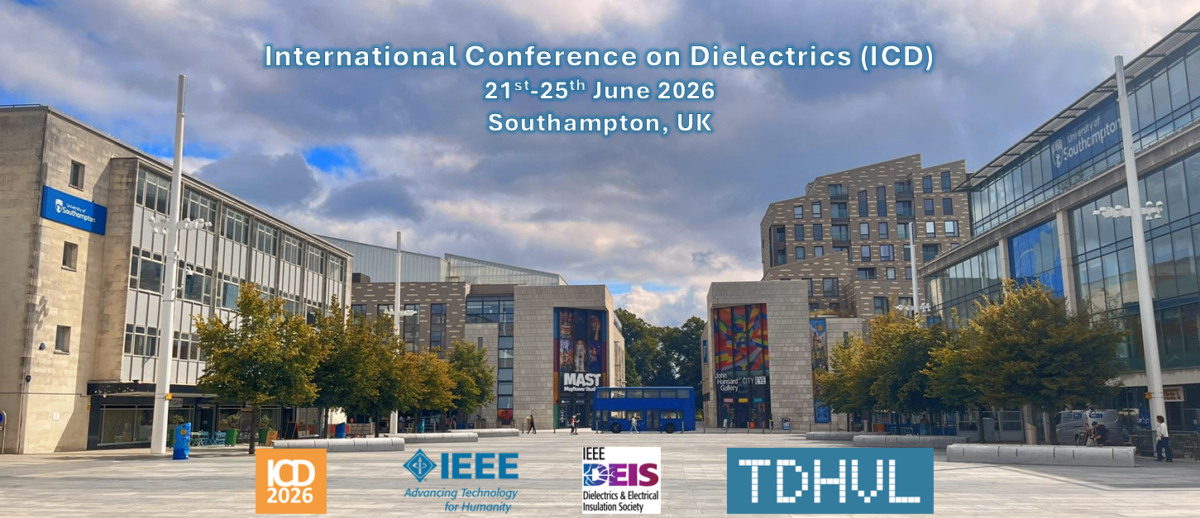
A four-hour workshop exploring the evolving landscape of electrical power systems for future electrified aircraft will be held at the IEEE ICD2026, in Southampton (UK). The sessions of the workshop aim to connect the aerospace, electrical insulation, and dielectrics communities within IEEE ICD 2026 (UK). This workshop is jointly organised by the IEEE-TEC Committee on Electrified Aircraft, the IEEE Technical Committee on Dielectrics and Electrical Insulation, and the IEEE ICD 2026 organising committee.
Suggested topics include:
- High-Voltage and Current DC or AC for Aircraft Electrification
- Insulation and Dielectric Performance at High Altitude
- High-Voltage DC Distribution Architecture and Power Conversion
- Diagnostics, Monitoring, Qualification, and Certification Pathways
The workshop will feature a keynote, panel discussions and open dialogues to identify critical technical questions, research directions, qualification, and certification needs that the community can address collaboratively during and beyond the conference. Members of IEEE DEIS are warmly encouraged to participate.
Workshop Technical Chair: Bahareh Zaghari, University of Southampton ([email protected])
Workshop Co-Technical Chair: Andrea Cavallini, University of Bologna ([email protected])
Keynote Speaker
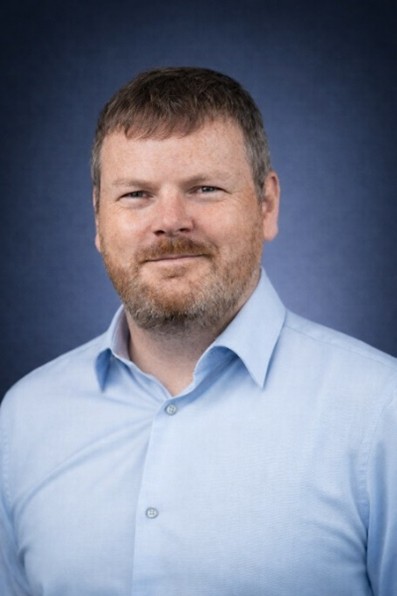
Andrew Benn is Associate Director of Engineering at Collins Aerospace, leading the development of advanced power electronics and motor drive systems for aerospace applications. A graduate of the University of Southampton, he maintains strong links with the academic community in the development of high voltage power electronics. His work focuses on high-voltage power conversion and distribution technology for electrified propulsion. In his most recent work he has provided technical leadership to Clean Aviation programmes to advancing technology blocks for future aircraft architectures.
Panel Moderator
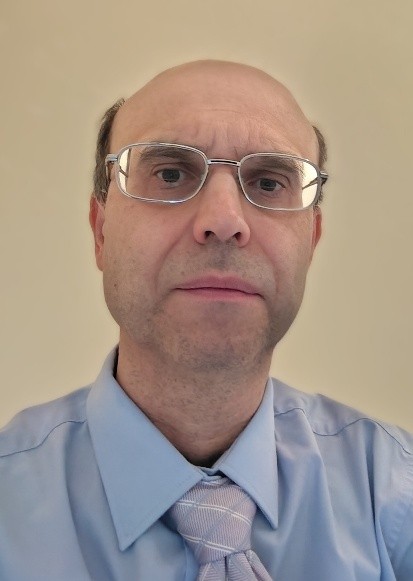
Igor Golosnoy is an Associate Professor in Modelling and Simulations in Electrical Power Engineering at the University of Southampton. He received MSc Applied Mathematics degree from Moscow Institute of Physics and Technology in 1992 and completed his Ph.D. at the Institute for Mathematical Modelling in Moscow in 1995, focusing on plasma emission spectroscopy and diagnostics. A senior member of IEEE and IoP, he has over 30 years experience in analysing electric discharge phenomena in gases and liquids, plasma material treatment, heat transfer and gas flow modelling. His research focuses on numerical modelling of physical processes in plasmas with emphasis on breakdown and ionization phenomena.
Panel members
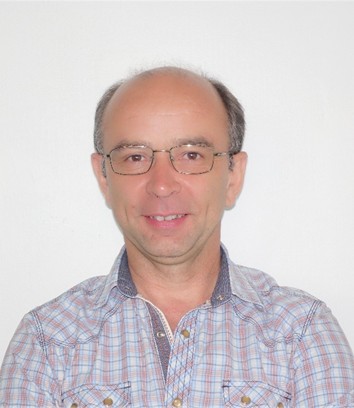
Gilbert Teyssedre (Senior Member, IEEE) received the Engineering degree in materials physics and the Graduate degree in solid state physics from Institut National des Sciences Appliquées (INSA), Toulouse, France, in 1989, and the Ph.D. degree from the Solid State Physics Laboratory, Paul Sabatier University, Toulouse, in 1993, for a work on ferroelectric polymers. He entered Centre National de Recherche Scientifique (CNRS), in 1995, and has been working since then with the Electrical Engineering Laboratory (now Laplace—Laboratory on Plasma and Energy Conversion), a joint research unit between CNRS and University of Toulouse. His research interests include the development of luminescence techniques in insulating polymers, with a focus on chemical and physical structure, degradation phenomena, space charge, and transport properties. He is currently a Senior Researcher with CNRS. He was the Head of the Solid Dielectrics and Reliability Group, Laplace, from 2004 to 2015. Dr. Teyssedre has been a member of the Scientific Committee of several conference series as CEIDP, since 2016, ICD, ICEMPE, and JiCable. He has been an Associate Editor of IEEE Transactions on Dielectrics and Electrical Insulation, since 2021.
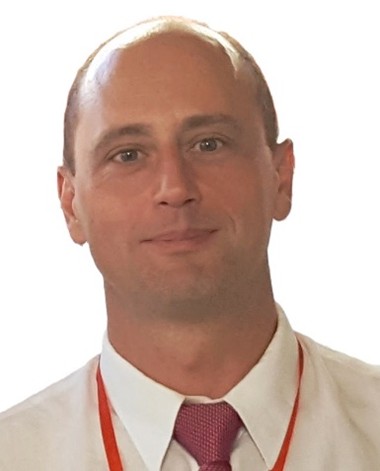
Guillermo Robles (Senior Member, IEEE) was born in Madrid, Spain, in 1969. He received the Ph.D. degree in Electronic Engineering from the Universidad Pontificia Comillas (ICAI), Madrid, in 2002. He joined the Department of Electrical Engineering, University Carlos III of Madrid, Spain, where he has been a Full Professor since 2023. He is also with the High-Voltage Research and Tests Laboratory (LINEALT). He has coauthored over 100 papers in international journals and conferences. He holds three patents in instrumentation, measurement, and signal processing systems. He has also been the Principal Investigator in several projects with private and public funding. Since 2019, he has been involved, in collaboration with Airbus Defence and Space, in the study, detection and identification of series arcs in aircraft in the framework of the European Project HECATE (GA-101101961) and ARDID, funded by Airbus. Some results during this ongoing collaboration have been published in different journals in topics related to transport electrification and instrumentation and measurement. His work has been focused on the design and adaptation of high-frequency current sensors and capacitive sensors aimed at arc parameterisation, localisation and identification to develop feasible arc fault detection devices.
Hadi Naderiallaf received the Ph.D. degree in electrical engineering (high-voltage engineering) from the University of Bologna, Italy, in 2021, and the M.Sc. degree in the same field from Leibniz University Hannover, Germany, in 2012. He is currently a Senior Research Fellow with the Power Electronics, Machines and Control (PEMC) Research Institute, University of Nottingham, U.K., where his work focuses on the design and reliability of electrical machine insulation systems for aerospace, automotive, and marine applications. His research interests include electrical insulating materials, partial discharge detection and modelling under AC/DC/PWM stress, insulation reliability of electrical machines, HV insulation design, multiphysics and space-charge analysis, condition monitoring, and transformer asset management, including dissolved gas analysis (DGA).localisation and identification to develop feasible arc fault detection devices.